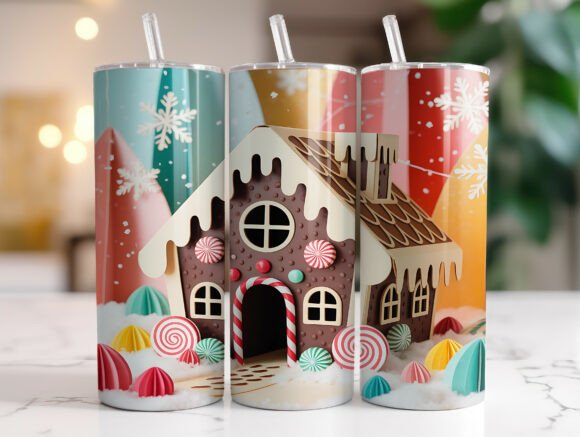
3D Gingerbread House Tumbler Wrap Design: A Practical Guide for Creators
For entrepreneurs and hobbyists alike, the holiday season represents a critical window for product launches. The 3D Gingerbread House Tumbler Wrap Design serves as a high-impact asset within this seasonal workflow. Unlike generic clip art, this specific design offers depth and visual interest that translates effectively onto curved surfaces. Understanding how to integrate this digital file into your production process is essential for maximizing efficiency and ensuring professional results. This guide explores the practical application of this design, from initial preparation to final product execution.
Understanding the Digital Asset and Its Specifications
Before integrating any design into a production line, it is vital to understand the technical constraints and capabilities of the file itself. The 3D Gingerbread House Tumbler Wrap Design is delivered as an INSTANT DOWNLOAD – NO PHYSICAL PRODUCTS. This distinction is crucial for planning your timeline. Because you will receive a digital file immediately upon purchase, there are no shipping delays or inventory risks associated with sourcing the artwork. You get direct access to the assets needed to begin production.
The package includes two distinct formats: 1 Straight PNG and 1 Tapered PNG. These variations are not merely aesthetic choices; they address specific physical requirements of different tumbler shapes. The straight wrap is designed for cylindrical tumblers with uniform diameters, while the tapered version accounts for tumblers that narrow toward the top or bottom. This dual-format approach ensures that the 3D perspective of the gingerbread house remains undistorted regardless of the vessel's geometry.
Technical specifications are non-negotiable in sublimation printing. The files provided are High resolution 300 DPI with dimensions of 9.3″ x 8.2″. This resolution is the industry standard for ensuring crisp lines and vibrant colors after the heat transfer process. Lower resolutions often result in pixelation or blurring, which can ruin the perceived value of a finished product. By adhering to these standards, the 3D Gingerbread House Tumbler Wrap Design guarantees that the intricate details of the gingerbread architecture—such as candy cane trimmings and icing textures—remain sharp and legible on the final product.
Integrating the Design into Your Production Workflow
The utility of this design extends beyond the moment of printing. It fits seamlessly into a broader creative and business workflow. For small business owners and freelancers, the ability to plan ahead is a competitive advantage. Since this is a printable PNG download ONLY, the workflow begins with file management. Upon receiving the download, the first step is organization. Save the files in a dedicated folder structure labeled by season and product type. This practice prevents version control issues later when you need to reprint best-sellers.
In the pre-production phase, compatibility checks are essential. While the design is optimized for sublimation, it interacts with various tools in your ecosystem. You will need reliable sublimation ink, compatible paper, and a heat press capable of maintaining consistent temperature and pressure. The 3D Gingerbread House Tumbler Wrap Design is intended to be printed directly from a raster graphics editor or a print driver that supports 300 DPI output. It is important to note that this is a printable design that cannot be edited or used as SVG file. This limitation requires users to work within the bounds of the provided image rather than attempting vector manipulation. Attempting to convert a PNG to an editable vector format often degrades the quality of the 3D effects and shading.
During the execution phase, the workflow shifts to physical application. The tapered and straight options allow for flexibility in inventory management. If you stock multiple tumbler brands, having both versions ready allows you to pivot quickly based on what hardware is available. This adaptability reduces downtime. When printing, ensure your printer settings match the 300 DPI requirement. Color calibration is also a key factor; the warm tones of the gingerbread house require accurate color profiles to avoid looking muddy or oversaturated after sublimation.
Commercial Application and Licensing Considerations
One of the primary drivers for purchasing digital assets like the 3D Gingerbread House Tumbler Wrap Design is commercial viability. The licensing terms for this specific design offer significant freedom for creators. You are welcome to use these files commercially on physical products such as t-shirts, stickers, mugs, and tumblers. This broad permission set enables entrepreneurs to diversify their product lines without needing separate licenses for each item type. For example, a creator could apply the same design to a holiday-themed sticker pack and a limited-edition tumbler collection, creating a cohesive brand aesthetic across different mediums.
However, clear boundaries exist regarding the digital file itself. You are NOT permitted to copy, resell or distribute the digital files. This restriction protects the intellectual property of the original designer and maintains the value of the marketplace. In a business context, this means you cannot list the PNG file itself for sale on Etsy, Gumroad, or other platforms. Your revenue must come from the physical goods you create using the design. Understanding this distinction is critical for compliance and long-term business sustainability. Violating these terms can lead to account suspensions and legal repercussions.
This licensing model encourages a focus on manufacturing and marketing rather than digital arbitrage. It aligns well with the "maker" economy, where value is added through craftsmanship, packaging, and customer service. By focusing on the physical end-product, creators can build a reputation for quality. The 3D Gingerbread House Tumbler Wrap Design becomes a tool for generating tangible value, rather than just another digital commodity.
Optimizing Quality Control and Consistency
Maintaining consistency is a challenge in sublimation, particularly with complex designs featuring gradients and shadows like the 3D gingerbread house. To achieve professional results, a rigorous quality control process should be implemented. Start by running a test print on scrap material before committing to expensive blanks. Check for color accuracy, ensuring that the reds and browns of the gingerbread house appear true to the screen.
Alignment is another critical factor. The 9.3″ x 8.2″ size is precise, but slight misalignments during wrapping can cause the design to look skewed. Use alignment guides or tape to secure the paper tightly against the tumbler surface before applying heat. The difference between the straight and tapered versions is specifically engineered to mitigate distortion. Using the wrong version for a specific tumbler shape will stretch the image, breaking the illusion of 3D depth. Always verify the curvature of your blank against the recommended file type before printing.
Long-term use of this design requires attention to storage and archival. Even though the file is digital, keeping backups in cloud storage and local drives ensures you can reproduce successful batches months later. Holiday trends are cyclical; a design that sells well one December may be requested again the following year. Having the original high-resolution files readily available allows for quick reprints without degradation in quality.
Strategic Planning for Seasonal Launches
For professionals and marketers, timing is everything. The 3D Gingerbread House Tumbler Wrap Design is inherently seasonal. To maximize sales, the integration of this asset should happen weeks before the peak shopping period. Begin testing prints in late summer or early autumn. This lead time allows for troubleshooting technical issues, such as color shifting or adhesion problems, without the pressure of immediate customer demand.
Consider how this design fits into a broader marketing strategy. It can serve as a flagship product for a holiday collection or as a promotional item for email subscribers. The visual appeal of a 3D design often performs better in social media advertising compared to flat graphics. High-quality photos of the finished product, showcasing the depth and detail of the gingerbread house, can drive engagement and conversions.
Furthermore, the instant nature of the download facilitates agile decision-making. If market trends shift or if a specific tumbler style becomes popular unexpectedly, you can adjust your production schedule immediately. There is no need to wait for physical samples or negotiate with suppliers for new artwork. This agility is a significant advantage for small businesses operating in fast-moving retail environments.
Final Thoughts on Implementation
The 3D Gingerbread House Tumbler Wrap Design is more than just a decorative image; it is a functional component of a streamlined production workflow. From its high-resolution specifications to its flexible licensing terms, every aspect is designed to support creators who value efficiency and quality. By understanding the technical requirements, respecting the usage rights, and implementing robust quality control measures, you can successfully leverage this asset to enhance your product offerings.
Whether you are a seasoned entrepreneur or a hobbyist exploring sublimation, the key to success lies in preparation and execution. Utilize the straight and tapered options to match your inventory, adhere to the 300 DPI standard for clarity, and focus on creating high-value physical goods. As you continue to refine your processes, remember to favorite the store to see upcoming designs that may complement your current collection. With the right approach, this digital file can become a cornerstone of your holiday success.