3d Space Black Icon: A Graphic Design Perspective for Modern Workflows
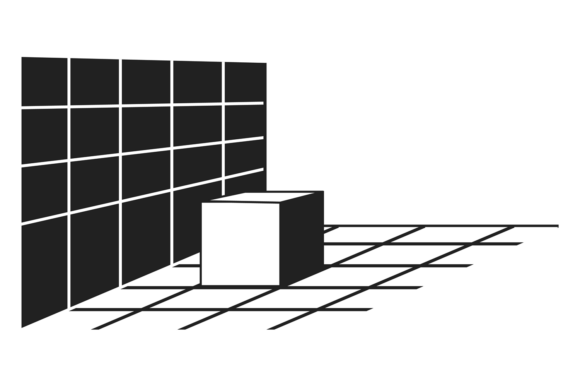
In the rapidly evolving landscape of digital communication, visual clarity is not just an aesthetic preference; it is a functional necessity. The 3d Space Black Icon, viewed from a graphic design perspective, represents more than a simple illustration. It is a versatile asset designed to convey depth, dimensionality, and modernity within a single visual element. When isolated on a white background, this icon becomes a foundational building block for user interfaces, marketing materials, and brand identities. Understanding how to integrate this specific type of vector or raster asset into your creative process can significantly streamline production times and elevate the perceived quality of your final deliverables.
The value of a high-quality 3D space icon lies in its ability to bridge the gap between abstract concepts and tangible understanding. Whether you are a freelance designer crafting a pitch deck, a product manager mapping out a feature set, or a marketer designing a landing page, the integration of such assets requires a strategic approach. This article explores the practical application of the 3d Space Black Icon across various stages of a project, focusing on file formats, workflow integration, and long-term usability.
Understanding the Asset: Format and Flexibility
Before integrating any graphic element into a project, one must understand its technical specifications. The 3d Space Black Icon is typically available in multiple formats, including EPS, JPG, SVG, and transparent PNG. Each format serves a distinct purpose within the broader design ecosystem, and selecting the right one depends entirely on the stage of your workflow and the intended output medium.
EPS (Encapsulated PostScript) files are the gold standard for print production and professional editing. If your project involves large-format printing, such as billboards or brochures, the EPS version ensures that the icon remains crisp at any scale. Because it is vector-based, the geometric precision of the 3D shading and black contours is preserved regardless of enlargement. For designers who need to manipulate the icon's color, stroke, or layer structure, the EPS file provides the necessary flexibility without degrading image quality.
SVG (Scalable Vector Graphics) is the preferred format for web development and responsive design. Unlike raster images, SVGs are defined by mathematical equations, making them incredibly lightweight and infinitely scalable. When embedding a 3d Space Black Icon into a website header, navigation menu, or interactive dashboard, the SVG format ensures fast load times and perfect rendering on all screen resolutions, from mobile devices to 4K monitors. Furthermore, SVGs can be styled directly with CSS, allowing developers to change the icon's fill or hover effects dynamically without needing new image files.
For scenarios requiring immediate implementation where vector editing is not feasible, transparent PNG and JPG formats offer convenience. The transparent PNG is essential for overlaying the icon onto complex backgrounds, ensuring the white isolation background does not interfere with the underlying design. This is particularly useful in social media graphics, presentation slides, or video overlays where the icon needs to sit seamlessly atop other visual elements. The JPG format, while less flexible due to its fixed resolution and lack of transparency support, remains useful for quick previews, email signatures, or contexts where file size compression is critical and lossless quality is secondary.
Strategic Integration in the Creative Process
The utility of the 3d Space Black Icon extends beyond mere selection; it dictates how you plan and execute your visual hierarchy. In the early stages of a project, such as wireframing or mood boarding, having access to a consistent library of icons like this allows for rapid prototyping. Instead of spending hours modeling a custom 3D object, designers can utilize pre-rendered assets to visualize spatial relationships and layout balance.
Consider a scenario where a startup is launching a new SaaS platform focused on cloud storage or data analytics. The concept of "space" and "depth" is metaphorically relevant. By incorporating the 3d Space Black Icon into the initial mockups, the team can establish a visual language that suggests expansion, technology, and future-forward thinking. This decision influences subsequent design choices, such as typography, color palettes, and motion graphics, creating a cohesive narrative before a single line of code is written.
During the execution phase, consistency is paramount. Using the same icon style across different touchpoints—be it the mobile app interface, the marketing website, or the investor presentation—reinforces brand recognition. The black color scheme of the icon offers a neutral yet bold contrast against light backgrounds, making it highly legible. However, designers must also consider accessibility. Ensuring that the black icon meets WCAG contrast ratios when placed over non-white backgrounds is a critical step in the quality control process. This might involve adding subtle drop shadows or adjusting the opacity of the surrounding elements to maintain readability for all users.
Workflow Optimization and File Management
Efficiency in design workflows often hinges on how well assets are organized and managed. Integrating the 3d Space Black Icon into a robust file management system prevents duplication and version confusion. Best practices suggest organizing these assets by format and usage context. For instance, keep the master EPS and SVG files in a central repository accessible to the entire design and development team, while storing optimized PNGs in a dedicated folder for marketing materials.
When working collaboratively, clear naming conventions are essential. Labeling files descriptively, such as icon_space_3d_black_v1.svg rather than final_icon.jpg, reduces friction during handoffs. This organization allows team members to quickly locate the correct version of the asset, whether they need the vector source for a logo lockup or a raster version for a social media post. Additionally, utilizing design systems or component libraries in tools like Figma or Sketch can automate the placement of these icons, ensuring that every instance of the 3d Space Black Icon maintains consistent sizing, spacing, and alignment throughout the project.
Practical Use Cases Across Industries
The versatility of the 3d Space Black Icon makes it applicable across a wide range of industries and use cases. In the realm of education, instructors can use the icon to represent modules related to astronomy, physics, or even abstract concepts like "thinking outside the box." Its clean, isolated nature ensures it fits well within slide decks and educational infographics without distracting from the core content.
For entrepreneurs and small business owners, this icon can serve as a powerful symbol for innovation. Placing it next to key performance indicators (KPIs) in a dashboard or using it as a bullet point in a strategic plan adds a layer of visual sophistication. It signals to stakeholders that the business is forward-thinking and detail-oriented. In the publishing sector, editors can utilize the icon as a chapter marker or section divider in digital magazines, leveraging its 3D depth to create a sense of progression through the content.
Freelancers and agencies often face tight deadlines, making the availability of high-quality, ready-to-use assets a significant advantage. Instead of commissioning custom 3D renders for every client request, a curated library containing items like the 3d Space Black Icon allows for rapid iteration. This agility enables professionals to focus their creative energy on strategy and composition rather than asset creation, ultimately delivering higher value to their clients.
Ensuring Long-Term Usability and Quality Control
As projects evolve, so do the requirements for visual assets. A design that works today may need adaptation tomorrow. The longevity of the 3d Space Black Icon relies on its adaptability. Because the asset is available in vector formats (EPS, SVG), it can be easily modified to fit future branding guidelines. Should a company decide to shift from a monochromatic black theme to a full-color palette, the vector layers allow for precise recoloring without losing the intricate 3D shading details.
Quality control also involves testing the icon across various platforms and devices. What looks sharp on a desktop monitor might appear pixelated on a low-resolution mobile screen if the wrong file format is used. Implementing a rigorous testing protocol that checks the icon's appearance in dark mode, light mode, and on different operating systems ensures a seamless user experience. Regular audits of your asset library help identify outdated versions or formats that no longer meet current industry standards, keeping your workflow efficient and your outputs professional.
Ultimately, the successful integration of the 3d Space Black Icon into your work is about more than just downloading a file. It is about understanding its role within the larger design ecosystem, managing its technical specifications effectively, and applying it strategically to enhance communication. By treating this asset as a critical component of your planning and execution process, you ensure that your visual outputs are not only aesthetically pleasing but also functionally robust and professionally executed.