Brick Wall Seamless Pattern: A Workflow Guide for Professional Design
In the realm of digital and print design, the quality of background textures often dictates the perceived professionalism of a final project. The Brick Wall Seamless Pattern is not merely an aesthetic choice; it is a functional asset that streamlines the creative process. For designers, architects, and marketers, integrating high-quality, tileable brick textures into a workflow reduces rendering times, ensures visual consistency across large surfaces, and elevates the realism of architectural visualizations. This guide explores how to effectively utilize a comprehensive bundle of realistic brick textures within your specific production pipeline.
Understanding the Mechanics of Seamless Textures
A standard photograph of a brick wall contains edges, lighting inconsistencies, and unique imperfections that prevent it from repeating without visible seams. When stretched or tiled in software like Adobe Photoshop, Illustrator, or 3D renderers, these edges create jarring lines that break immersion. A true Brick Wall Seamless Pattern is engineered differently. The texture is mapped so that the left edge aligns perfectly with the right, and the top aligns with the bottom. This mathematical precision allows the image to repeat infinitely in any direction.
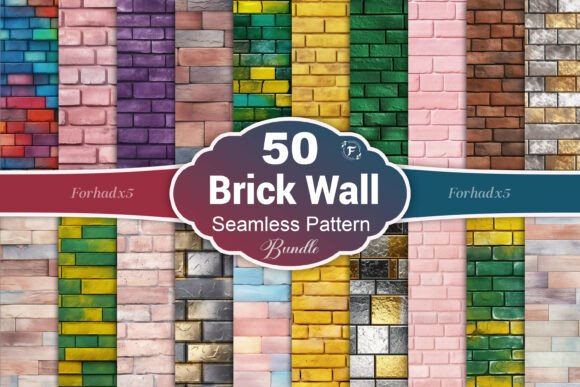
When you acquire a bundle containing 50 high-resolution JPG files at 2400×2400 pixels, you are securing a resource designed for scalability. The RGB color profile ensures compatibility with digital screens, while the repetitive feature guarantees that whether you are covering a small UI element or a massive virtual warehouse floor, the transition remains invisible. Understanding this technical foundation is crucial before importing assets into your project files, as it dictates how you will manipulate scale, opacity, and blending modes later in the process.
Integration into Architectural and Interior Workflows
For professionals in architecture and interior design, the application of brick textures occurs primarily during the visualization phase. Before a single physical brick is laid, clients need to see the potential of a space. Using a realistic Brick Wall Seamless Pattern accelerates this decision-making process. Instead of spending hours modeling individual bricks in 3D software, which consumes significant processing power, designers can apply a seamless texture map to a simple plane geometry.
This approach fits seamlessly into the pre-production and rendering stages. When creating interior design visualizations, the texture serves as a base layer that establishes mood and materiality. You can adjust the UV mapping to control the size of the bricks relative to the room's dimensions, ensuring the scale feels authentic. Furthermore, because the pattern repeats flawlessly, you can cover entire facades in architectural renders without worrying about awkward cut-offs at the corners of the building. This efficiency allows teams to focus on lighting, composition, and furniture placement rather than troubleshooting texture artifacts.
Consider the workflow of a game designer or environment artist. In urban-style illustrations or 3D environment textures, the seamless nature of the asset is non-negotiable. It allows for the creation of expansive cityscapes where walls extend beyond the camera's view. By utilizing a library of varied brick patterns—ranging from clean modern masonry to weathered industrial styles—you can differentiate zones within a game world or illustration without breaking the visual flow. The ability to mix and match these textures based on the narrative or functional requirements of the scene is a key advantage of having a diverse bundle.
Digital Design and Branding Applications
In the digital landscape, the utility of a Brick Wall Seamless Pattern extends far beyond architectural simulation. Web developers and UI/UX designers frequently use these textures to add depth and character to flat interfaces. A subtle brick background can serve as an effective backdrop for landing pages, providing a tactile feel that contrasts well with crisp typography and modern icons. However, implementation requires careful planning regarding file size and load times.
Since the bundle provides high-resolution files, optimization is a necessary step before deployment. For website backgrounds, it is often beneficial to downscale the image or compress it using lossless techniques to maintain visual fidelity while ensuring fast page loads. Once optimized, the texture can be set to repeat in CSS, leveraging its seamless properties to fill the entire viewport regardless of screen size. This method creates a consistent brand atmosphere across desktop and mobile devices.
Content creators and social media managers also benefit from these assets when producing YouTube thumbnails, channel art, or blog headers. The urban aesthetic associated with brick walls conveys a sense of stability, creativity, and grit, which resonates well with audiences in tech, lifestyle, and education niches. When designing presentation slides or digital posters, applying the pattern as a low-opacity overlay behind text can improve readability by reducing the starkness of a solid white background. The key here is balance; the texture should support the content, not compete with it.
Preparing Assets for Print-on-Demand Merchandise
The versatility of a Brick Wall Seamless Pattern shines brightly in the print-on-demand (POD) industry. Whether you are designing T-shirts, hoodies, tote bags, or phone cases, the requirement for a pattern that repeats without visible joins is critical. Unlike digital designs where resolution can sometimes be adjusted on the fly, print files must meet strict DPI requirements to ensure sharp output on fabric and hard goods.
Before starting a POD project, organize your asset library by color palette and texture style. The 50-file bundle offers a range of options, allowing you to select a specific brick tone that matches your brand identity or seasonal collection. For apparel, the texture might be used as an all-over print or as a panel on the back of a hoodie. Because the pattern is tileable, you can expand the design area in your vector or raster software to fit the specific template provided by the printing vendor without worrying about edge alignment.
Compatibility is another factor to consider. While the source files are in RGB for digital use, they must be converted to CMYK for professional printing to ensure color accuracy. Most high-quality bundles are designed with this conversion in mind, but it is always prudent to perform a test print or soft proof before committing to a large run. Additionally, when applying these textures to items like mugs or tumblers, remember that the curvature of the object may distort the perception of the pattern. Adjusting the scale of the bricks slightly larger than intended can sometimes compensate for this visual distortion, maintaining the integrity of the design once printed.
Workflow Optimization and Quality Control
To maximize the value of a Brick Wall Seamless Pattern bundle, integrate it into a structured asset management system. Disorganized files lead to wasted time searching for the perfect texture during critical deadlines. Tag your files according to attributes such as "weathered," "clean," "red," "grey," or "industrial." This organization allows for rapid retrieval when a project calls for a specific mood.
Efficiency in the creative process also comes from establishing templates. If you frequently create social media banners or product mockups, save master files with the brick texture already applied and positioned. This way, future projects require only the addition of new text or logos. Consistency is key for branding; using the same texture family across different mediums—from your website background to your packaging design—creates a cohesive visual language that strengthens brand recognition.
Finally, consider the long-term usability of these assets. Trends in design shift, but the fundamental appeal of brick textures remains stable due to their association with durability and classic aesthetics. By investing in a high-quality, versatile bundle, you are building a resource library that will remain relevant for years. Regularly review your usage of these textures to ensure they still align with current design standards, adjusting opacity, saturation, or blending modes as needed to keep your work fresh and engaging.
Incorporating a Brick Wall Seamless Pattern into your toolkit is a strategic move that enhances both the speed and quality of your output. From the initial planning stages of an architectural render to the final export of a print-ready T-shirt design, these textures provide a reliable foundation for creative execution. By understanding their technical properties and integrating them thoughtfully into your workflow, you can produce professional-grade results that stand out in a crowded marketplace.