Impossible 3D Cube Optical Illusion: A Mind-Bending Guide to Geometric Wall Art
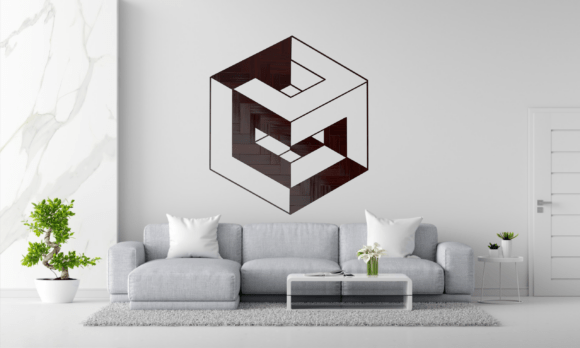
In the realm of modern interior design and digital fabrication, few concepts captivate the imagination quite like the Impossible 3D Cube Optical Illusion. This geometric marvel does more than just decorate a wall; it challenges our perception of reality, turning a flat surface into a portal of visual paradox. Whether you are a seasoned woodworker, a digital artist, or a homeowner looking to inject a dose of surrealism into your living space, understanding how this illusion works—and how to create it—is a journey into the intersection of mathematics, art, and technology.
This article explores the mechanics behind the impossible cube, its significance in contemporary decor, and provides a comprehensive guide on how to bring this mind-bending design to life using accessible tools like laser cutters, CNC routers, and 3D printers.
The Psychology and Geometry of the Impossible Cube
To appreciate the Impossible 3D Cube Optical Illusion, one must first understand why it tricks the brain. Our visual system is hardwired to interpret two-dimensional images as three-dimensional objects based on cues like perspective, shading, and overlapping lines. The impossible cube exploits these cognitive shortcuts.
At its core, the design is a collection of straight lines that, when viewed from a specific angle, form the edges of a cube. However, if you trace the lines logically, they connect in ways that defy the laws of Euclidean geometry. Corners that should be "front" suddenly become "back," creating a loop that cannot exist in physical space. This phenomenon, often rooted in the work of M.C. Escher, creates a sense of suspension and weightlessness, making the object appear as though it is floating or defying gravity.
For the average observer, the result is a moment of cognitive dissonance—a delightful confusion where the eye sees what the logic of the brain says is impossible. This makes the impossible cube not just a piece of art, but an interactive experience that engages viewers every time they walk past it.
Why Geometric Illusions Define Modern Interiors
In today's fast-paced world, home decor has shifted towards pieces that offer more than just aesthetic appeal; they offer conversation starters and intellectual engagement. The Impossible 3D Cube fits perfectly into the modern interior design ethos, which values minimalism, clean lines, and conceptual depth.
Key reasons for its popularity include:
- Visual Depth without Clutter: Unlike heavy furniture or large paintings, a geometric line-art installation adds perceived depth to a room without physically occupying much space.
- Universal Appeal: The concept of optical illusions transcends cultural and age barriers, making it a safe yet striking choice for offices, galleries, and family homes alike.
- Light and Shadow Play: Because these designs are often constructed with layers or open frameworks, they interact dynamically with natural and artificial light, changing appearance throughout the day.
Whether mounted on a sleek white wall in a minimalist apartment or used as a centerpiece in a creative studio, the impossible cube serves as a bridge between abstract mathematics and tangible beauty.
From Digital File to Physical Masterpiece
One of the most exciting aspects of the Impossible 3D Cube Optical Illusion is its accessibility. In the past, creating such precise geometric art required months of manual drafting and carving. Today, thanks to digital downloads and maker technology, anyone can produce professional-grade results.
The process begins with a high-quality digital file. These files are designed to be fully scalable, meaning you can resize them freely to create small decorative desk ornaments or massive wall panels that span entire rooms. The versatility of the design allows it to be adapted for various materials, including wood, MDF, acrylic, metal, and foamboard.
Choosing Your Fabrication Method
Depending on your available equipment and desired finish, there are several pathways to create this artwork:
1. Laser Cutting (The Precision Choice)
Laser cutters, such as the Glowforge, xTool, or K40, are ideal for this project. They offer extreme precision, allowing for intricate cuts in thin materials like acrylic or plywood. The heat of the laser seals the edges of wood, preventing splintering, while melting acrylic to create a glass-like finish. For those using consumer-grade machines like Cricut or Silhouette, the SVG format ensures the machine interprets the complex vectors accurately.
2. CNC Routing (The Industrial Option)
For larger projects or thicker materials, a CNC router like the X-Carve or Shapeoko is the tool of choice. Using the DXF format, you can carve deep grooves or cut through substantial blocks of wood or aluminum. This method is particularly useful if you want to create a relief effect where the cube appears to emerge from the background material.
3. 3D Printing (The Volumetric Approach)
While traditional 3D printing builds solid objects, the STL format included in this design package allows for a unique twist. You can print the cube as a solid sculpture, or use advanced slicing techniques to create a "ghost" version where only the structural lines are printed. This is perfect for prototyping before committing to a final material.
Understanding the Included File Formats
A common misunderstanding among beginners is assuming all digital files are created equal. To successfully fabricate the Impossible 3D Cube, it is crucial to use the correct file format for your specific machine. Here is a breakdown of the formats typically included in a comprehensive download:
- SVG (Scalable Vector Graphics): The industry standard for vinyl cutters and entry-level laser cutters. It preserves the vector nature of the design, ensuring no loss of quality when resizing.
- DXF (Drawing Exchange Format): Essential for industrial laser cutters and CNC routers. It is compatible with CAD software and offers robust data handling for complex paths.
- PNG & PDF: Useful for previews and documentation. The PNG preview image helps visualize the final look, while the PDF is great for printing reference guides or scaling checks.
- STL (Stereolithography): Specifically designed for 3D printing and CNC carving. This format defines the surface geometry of the object, allowing for true three-dimensional fabrication.
- EMF (Enhanced Metafile): A vector format often used in Windows-based design applications, offering flexibility for further editing in graphic software.
Practical Tips for Assembly and Installation
Once your pieces are cut or printed, the assembly phase brings the illusion to life. The magic of the Impossible 3D Cube often relies on layering. By stacking multiple cutouts at varying depths, you enhance the 3D effect, making the cube appear to float even more convincingly.
Material Selection Matters: If you choose wood, consider staining it to highlight the grain against the negative space. Acrylic offers a futuristic, translucent look that plays beautifully with backlighting. Metal provides a stark, industrial contrast that suits modern office environments.
Mounting Techniques: For wall panels, use invisible mounting clips or standoffs. Standoffs are particularly effective because they lift the artwork off the wall, casting shadows that reinforce the illusion of depth. Ensure the viewing angle is optimized; the impossible cube is usually designed to be viewed from a specific frontal perspective, so placement is key.
Common Misconceptions and How to Avoid Them
As you embark on this creative journey, be aware of a few common pitfalls. First, many assume that the illusion works from every angle. In reality, the Impossible 3D Cube is an anamorphic or perspective-based illusion. If viewed from too far to the side, the geometry will resolve into simple lines, breaking the spell. Therefore, position your artwork where the primary viewing angle aligns with the design intent.
Second, do not underestimate the importance of scale. While the design is fully scalable, shrinking it too much can make the lines indistinguishable, while enlarging it excessively may require structural reinforcement to prevent sagging. Always test a small prototype before cutting your final, expensive material.
Conclusion: Bringing Art and Logic Together
The Impossible 3D Cube Optical Illusion represents the perfect marriage of artistic vision and technological capability. It transforms a simple geometric pattern into a profound statement about perception and reality. By utilizing the right digital files—whether SVG, DXF, or STL—and leveraging tools like laser cutters and CNC routers, you can create a stunning piece of wall decoration that elevates any space.
Whether you are building a portfolio for your woodworking business, enhancing a classroom environment with educational geometry, or simply adding a touch of mystery to your home, this project offers endless possibilities. Embrace the challenge, experiment with different materials, and let your creativity defy the boundaries of the possible.