Red Christmas Glitter Text Effect: A Practical Guide for Holiday Design
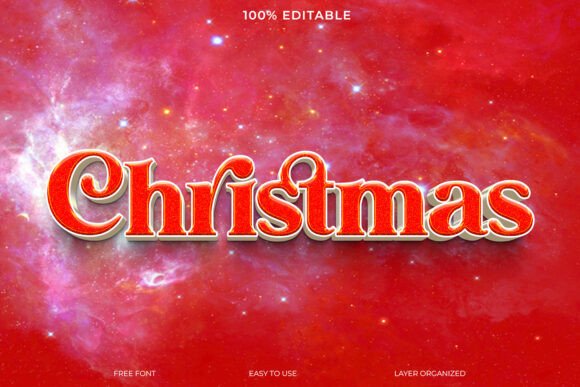
The Red Christmas Glitter Text Effect has become a staple in holiday visual communication, offering a festive and sparkling aesthetic that immediately signals the season. This specific design style combines a bold red glitter texture with a clean 3D look, creating a visual hierarchy that stands out against both dark and light backgrounds. For designers, marketers, and hobbyists alike, understanding the mechanics, applications, and limitations of this effect is crucial for making informed creative decisions. Unlike flat text or simple gradients, this effect relies on complex layering to simulate depth and materiality, making it a distinct choice within the broader category of holiday typography.
Defining the Visual Characteristics
At its core, the Red Christmas Glitter Text Effect is defined by its texture and dimensionality. The "glitter" component is not merely a color fill; it is a composite texture designed to mimic the chaotic reflection of light off metallic particles. When paired with a deep, rich red, the result is a high-contrast element that draws the eye. The addition of a clean 3D look further separates this style from standard 2D overlays. This three-dimensionality is typically achieved through drop shadows, bevels, and extrusion layers that give the text weight and presence.
What makes this particular variation distinct is the balance between chaos and structure. While glitter implies randomness, the underlying typeface and the 3D rendering provide a structured foundation. This duality allows the text to remain legible while still conveying a sense of celebration. The use of organized layers in digital formats ensures that the effect remains editable, allowing users to tweak the intensity of the sparkle or the depth of the shadow without compromising the overall integrity of the design.
Comparing Glitter Effects with Alternatives
When evaluating holiday typography options, the Red Christmas Glitter Text Effect sits at a specific point on the spectrum of visual complexity. It is more elaborate than solid color fills but generally less resource-intensive than full 3D renders created from scratch. Compared to matte finishes, which offer a sophisticated and understated look, the glitter effect is inherently attention-grabbing. Matte designs are often preferred for formal invitations or luxury branding where subtlety is key, whereas the glitter effect excels in contexts requiring immediate engagement, such as social media posts or promotional banners.
Another common alternative is the gradient text effect. Gradients provide a smooth transition of color and can mimic metallic sheens, but they lack the granular texture that defines glitter. A gradient might suggest gold or silver, but it rarely captures the tactile quality of actual sparkles. If the goal is to evoke the feeling of physical confetti or sequins, the Red Christmas Glitter Text Effect is superior. However, if the design requires a sleek, modern minimalism, a gradient or solid color may be a more appropriate tradeoff.
Furthermore, when compared to photorealistic textures applied to text, the stylized nature of this glitter effect offers better scalability. Photorealistic images can pixelate or lose clarity when resized, particularly on smaller screens. The vector-based or smart-object approach used in many versions of this effect ensures that the text remains crisp across various resolutions, from mobile notifications to large-format prints.
Evaluating Strengths and Tradeoffs
The primary strength of the Red Christmas Glitter Text Effect lies in its versatility and ease of customization. Because these designs often feature organized layers, users can modify the font, adjust the hue of the red, or even replace the glitter texture with a different pattern. This flexibility makes it an efficient tool for agencies managing multiple client campaigns. The inclusion of a free font in many templates lowers the barrier to entry, ensuring that the design does not rely on proprietary licensing that could complicate distribution.
However, there are tradeoffs to consider. The most significant limitation is context appropriateness. The bold red and sparkling texture can easily overwhelm delicate layouts or clash with other vibrant elements. In a design system that prioritizes whitespace and minimalism, this effect can feel intrusive. Additionally, the complexity of the layers means that file sizes can be larger than simple text files, which may impact loading times for web-based projects if not optimized correctly.
Another consideration is accessibility. High-contrast glitter effects can sometimes reduce readability for individuals with visual impairments, particularly if the background contrast is insufficient. Designers must evaluate whether the decorative value outweighs potential legibility issues. In some cases, using the effect for headlines only, while keeping body copy in a clean sans-serif, provides a balanced solution.
Ideal Use Cases and Scenarios
The Red Christmas Glitter Text Effect is best suited for projects where the primary objective is to capture attention quickly. Social media posts, particularly on platforms like Instagram and Facebook, benefit significantly from this style. The algorithmic preference for engaging visuals means that the sparkling texture can increase click-through rates and interaction. Similarly, holiday cards and greeting messages utilize this effect to convey warmth and excitement instantly.
For commercial applications, this effect works well in retail environments, both online and offline. Promotional flyers, sale banners, and window displays often employ bold red text to signal urgency and festivity. The 3D aspect adds a premium feel that suggests quality, making it suitable for product launches or special edition announcements during the holiday season.
Conversely, there are scenarios where this effect is less effective. Corporate communications that require a serious tone should avoid overly festive typography. Internal newsletters or financial reports intended for the holiday period should maintain a professional aesthetic, perhaps opting for subtle seasonal accents rather than bold glitter text. Similarly, designs targeting older demographics who prefer traditional aesthetics might find the modern 3D glitter look too flashy.
Decision Factors for Implementation
Before integrating the Red Christmas Glitter Text Effect into a project, several decision factors should guide the process. First, assess the medium of delivery. Is the final output digital, print, or video? Digital screens render bright reds and sparkles vividly, while print requires careful attention to CMYK color profiles to ensure the red does not appear muddy. Second, consider the audience expectations. Does the target demographic respond positively to bold, celebratory graphics, or do they prefer understated elegance?
Third, evaluate the technical requirements. If the design needs to be animated later, the organized layers of a well-structured glitter text template will streamline the workflow. If the text needs to be translated into multiple languages, the editable nature of the font ensures that the effect can be reapplied without losing quality. Finally, weigh the time investment. While pre-made templates save time, customizing them to fit a unique brand identity may require additional effort. For teams with limited resources, the efficiency of an organized, layered template often justifies the initial learning curve.
Practical Application Examples
Consider a small business owner creating a "Holiday Sale" announcement. Using a standard black text might go unnoticed in a crowded feed. By applying the Red Christmas Glitter Text Effect, the message gains immediate visual weight. The bold red aligns with traditional holiday associations, while the glitter adds a touch of magic that encourages engagement. In this scenario, the effect serves a functional purpose beyond mere decoration.
In another example, a family designing a personalized holiday card might choose this effect for the recipient's name or the main greeting. The 3D look gives the card a crafted, handmade feel, even when printed digitally. The ability to edit the text ensures that each card feels unique. However, if the same family were designing a formal invitation to a charity gala, they might opt for a gold foil effect or a serif font in a muted color, reserving the glitter for more casual communications.
Conclusion on Strategic Selection
The Red Christmas Glitter Text Effect is a powerful tool in the holiday design toolkit, offering a blend of tradition and modern digital aesthetics. Its distinct combination of bold color, sparkling texture, and 3D depth makes it ideal for high-impact visuals where engagement is paramount. However, its effectiveness depends on strategic application. By understanding how it compares to matte, gradient, and photorealistic alternatives, designers can make informed choices that align with their specific goals.
Ultimately, the decision to use this effect should be driven by the desired emotional response and the practical constraints of the project. When used appropriately, it enhances the festive atmosphere and communicates joy effectively. When overused or misapplied, it can detract from the message. By weighing the strengths, tradeoffs, and contextual fit, creators can leverage this versatile resource to produce holiday content that resonates with their audience.